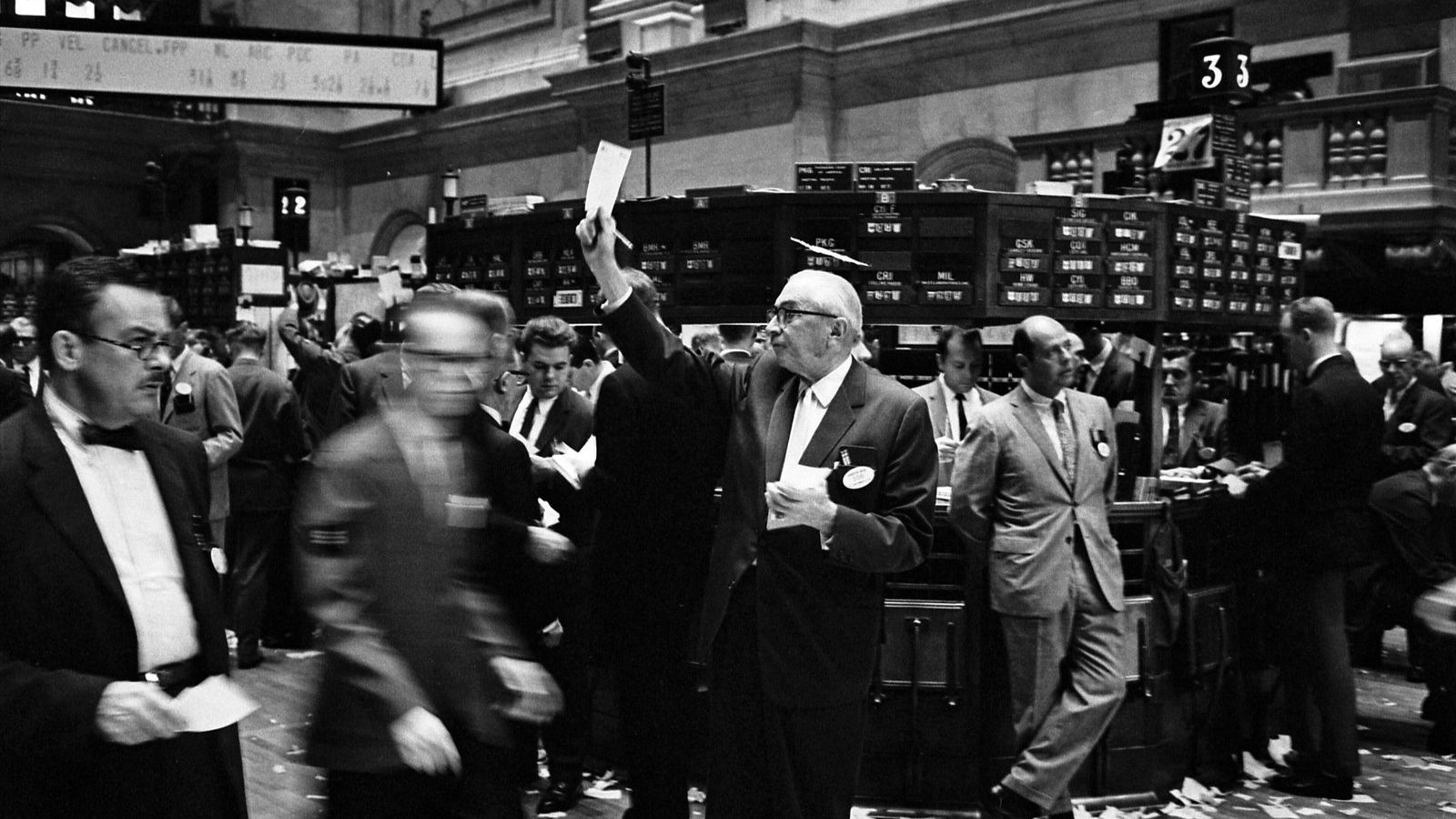
 Image: Thomas J. O'Halloran, Library of Congress, public domain
Ten numbers every economics student should know
Economists are often accused of knowing the price of everything, which is unfair, since most of us cannot remember what we paid for lunch. What an economist does carry around is a short list of reference values, the way a doctor knows a normal blood pressure and a pilot knows a stall speed. A headline that says inflation is 4 per cent, or that a merger will give a firm 40 per cent of a market, means something only against such a list. Here are ten entries from it, with the measurement behind each, because a number without its method is a rumour.
1. Two per cent a year
The inflation target of the Federal Reserve, the European Central Bank, and the Bank of England. The Fed adopted it formally in January 2012 and measures it with the price index for personal consumption expenditures; the ECB restated its target as a symmetric 2 per cent in July 2021 and uses the harmonized index of consumer prices; the Bank of England has had a 2 per cent target on the consumer price index since December 2003. The Fed's mandate and the Bank of England's target page say so in their own words. Why not zero is a question Unit 9 answers.
2. Seventy
Divide 70 by a growth rate in per cent and you have the years it takes for the quantity to double. The exact figure is 100 times the natural logarithm of 2, which is 69.3, and the rule works for anything that compounds: income, population, prices, and debt. At 2 per cent inflation the price level doubles in 35 years; at 7 per cent growth an economy doubles in 10. A post on this blog works the rule through China's forty years.
3. 9.1 per cent
The rise in United States consumer prices in the twelve months to June 2022, by the Bureau of Labor Statistics' index for all urban consumers, the fastest since November 1981. The euro area's peak came in October 2022 at 10.6 per cent by Eurostat's harmonized index, and the United Kingdom's in the same month at 11.1 per cent. These are the numbers against which every later inflation figure of the decade is read, and the gap between them and the 2 per cent target is what the interest rate rises of 2022 and 2023 were about.
4. About 110 trillion dollars
World output in 2024 at market exchange rates, by the International Monetary Fund's World Economic Outlook, of which the United States produced about 29 trillion by the Bureau of Economic Analysis' national accounts, China about 18 trillion, and the European Union about 19 trillion. A billion is a thousand million and a trillion is a thousand billion, in the short scale that the masterclass and every statistical office now use. A number in the news that is in billions is a national matter; one in trillions is a world matter; and a proposal that costs 100 billion dollars is about one tenth of one per cent of world output.
5. Well over 90 per cent
The share of the money in a modern economy that is bank deposits rather than notes and coins. The Bank of England's explainer of 2014 gives 97 per cent for the United Kingdom, and the figure is similar in the euro area and the United States. The implication, that most money is created by commercial banks when they lend, is the subject of another post and of Unit 9.
6. About two
The loss aversion coefficient: a loss weighs about twice as much as an equal gain in the decisions people make. Tversky and Kahneman's 1992 estimate was 2.25, and later studies on larger samples give values from about 1.5 to 2.5. It is the reason people refuse a coin toss that pays 150 against a loss of 100, hold shares that have fallen, and keep a coffee mug they were given five minutes ago. Unit 14 builds the value function around it.
7. 1,800
The Herfindahl-Hirschman index above which the 2023 United States merger guidelines treat a market as highly concentrated, with a rise of more than 100 points from a merger presumed to be unlawful unless the firms can show otherwise. The index is the sum of the squared market shares in per cent, so a market of ten equal firms scores 1,000 and a market of four equal firms scores 2,500. The European Commission's guidelines use 2,000 and a rise of 150. Unit 5 computes the index for a real merger from the shares in a published decision.
8. 207 per cent a day
The daily inflation rate in Hungary in July 1946, the highest ever recorded, which meant that prices doubled about every fifteen hours. The estimate is from Steve Hanke and Nicholas Krus's table of world hyperinflations and is quoted as approximate for the reasons the post on the episode explains. Zimbabwe in November 2008 is second, Germany in 1923 fifth. A rate of 50 per cent a month is the conventional threshold for a hyperinflation, and no rich country has been near it since the 1940s.
9. About 90 and about 50 per cent
The shares of Americans born in 1940 and in the 1980s who earned more than their parents had at the same age, adjusted for inflation. Raj Chetty and his co-authors computed them from tax records and census data in a 2017 paper in Science. The fall is the single most quoted fact about social mobility in the United States, and the paper shows that slower growth and a more unequal distribution of it each account for part of the decline. Unit 12 presents it as the second of its two research spotlights.
10. 0.41, 0.27, and 0.63
The Gini coefficients of income in the United States, Norway, and South Africa in the World Bank's recent estimates, on a scale where 0 is perfect equality and 1 is one household with everything. Most rich countries lie between 0.25 and 0.40 after taxes and transfers, Latin America and southern Africa between 0.45 and 0.65. The coefficient is twice the area between the Lorenz curve and the diagonal, which Unit 12 computes from five income shares by hand. It is written as a decimal; a Gini of 41 is the same number in a different convention, and a headline that compares a 41 with a 0.27 has made a mistake.
What to do with the list
Carry it, use it, and date it. Every one of these numbers has a source and a year, and several will have changed by the time you read this, which is why each entry names where it comes from. The key models page of the masterclass collects the equations of the sixteen units in the same spirit, each with the conditions under which it holds, and the Saturday summary email of each unit ends with the numbers worth knowing from that week.