 Image: University of the Fraser Valley, CC BY 2.0
What you can do with an economics degree
Britain's Department for Education links the tax records of every graduate to the subject they studied and publishes the result each year as the Longitudinal Education Outcomes data. In every edition so far, economics graduates five years after graduation have had median earnings among the three highest of any subject, in the company of medicine and mathematics, and above law, engineering, and computing. The American data tell the same story: in the Census Bureau's survey of degree holders, economics majors earn more at mid-career than graduates of almost any other subject outside engineering, and the gap widens with age. Whatever else is true of an economics degree, the labour market values it.
Where the graduates go
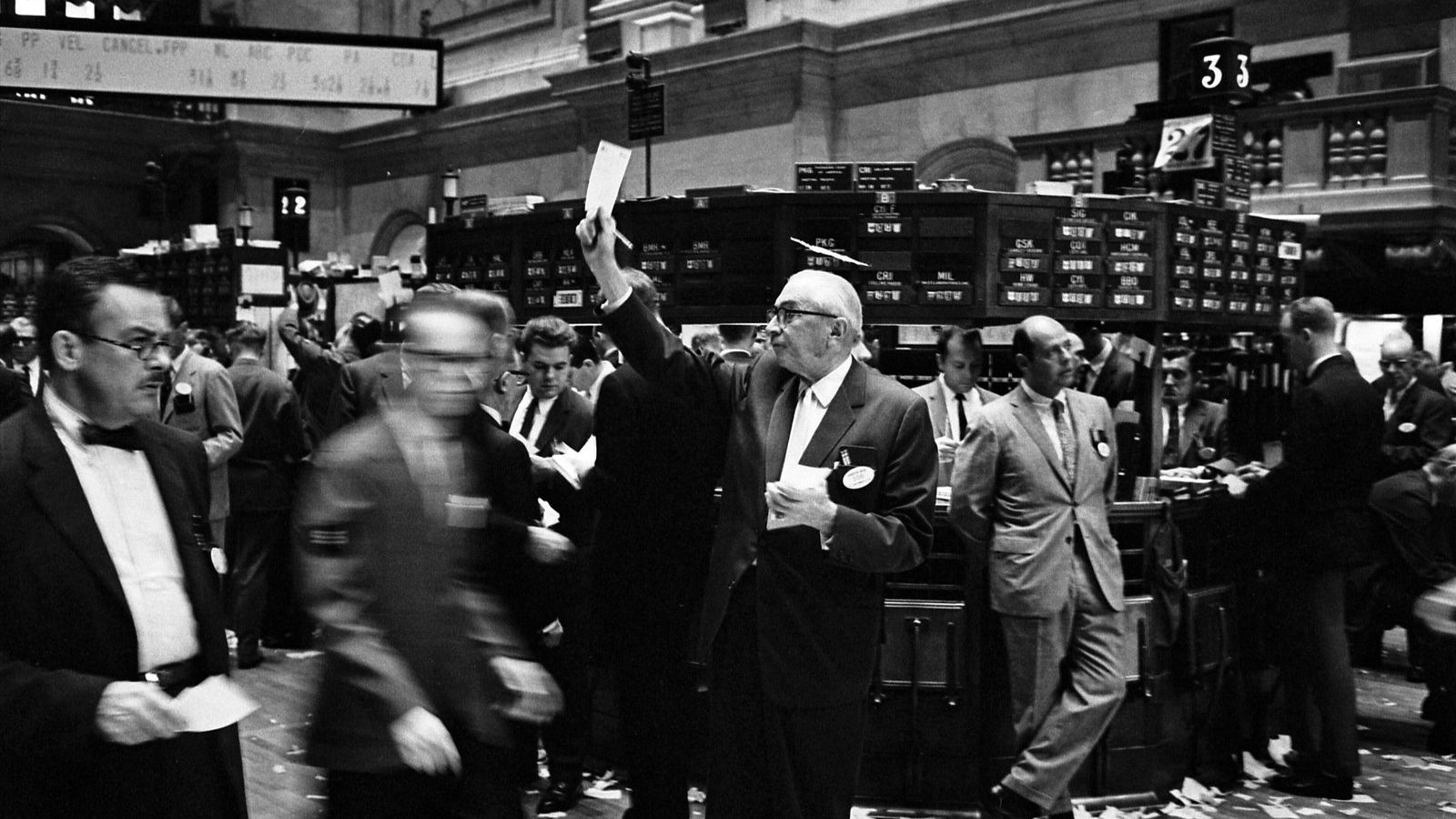
Very few of them become economists in the sense of the job title. In the United States the whole profession, counting government, business, and research institutes but excluding university teaching, numbers around twenty thousand people, against about thirty thousand economics degrees awarded every year. Only a small minority of graduates go on to a doctorate, and only a part of those end up as academic economists, so the research path that the word economist suggests is the career of perhaps two or three graduates in a hundred. The rest work in finance and banking, in consulting, in the analytics and strategy departments of large firms, in government departments and central banks, in international organizations, in technology companies, where economists design marketplaces and pricing, in journalism, and in law after a conversion course. The careers pages of the American Economic Association describe these routes, and the UK graduate outcomes data let you look up the earnings by subject and by university yourself.
What the degree trains you to do
Employers are paying for a set of habits more than for a body of knowledge. The first is the ability to build a simple model of a situation, with the main forces identified and the rest left out, and to say what the model predicts. The second is comfort with data: finding it, cleaning it, plotting it, and knowing what it can and cannot show, which the degree teaches through econometrics and which the market now calls data analysis. The third is the habit of thinking at the margin and in terms of opportunity cost, which turns out to be rare and valuable in any organization that allocates money. The fourth, and the one most often missing, is the ability to write the result in three clear paragraphs for a reader who will not look at the tables. A graduate who has all four is useful in almost any office, and a graduate who has the first three and not the fourth will be outpaced by one who has all of them.
The mathematics question
Prospective students ask how much mathematics the degree needs, and the honest answer is more than the brochure says. A good first-year sequence uses calculus from the first week and matrix algebra by the second year, and the statistics courses are the heart of the degree. The quantity of mathematics is also what separates degrees that open the research path from degrees that do not: a graduate school will look at the mathematics and statistics courses on a transcript before anything else. If you might want a doctorate, take real analysis, linear algebra, and probability as options, even if your department does not require them, and do a dissertation with data. If you know you do not, the degree still rewards the mathematics, because the analytical jobs that pay best are the ones that use it.
A worked number
Suppose, in round figures drawn from the UK data of recent years, that the median economics graduate earns about 10,000 pounds a year more at age 30 than the median graduate across all subjects, and that the gap holds for a working life of forty years without growing, which understates it. The undiscounted difference is 400,000 pounds; discounted at 3 per cent a year it is about 230,000 pounds in today's money. The tuition fee for a three-year degree in England is a little under 30,000 pounds, and the forgone earnings are the larger cost of any degree, in the way that Unit 1 of the masterclass works through as its first example of opportunity cost. Part of the gap reflects who chooses economics rather than what economics does to them, which is the selection problem that Unit 1 also explains, and the studies that try to correct for it still find the return to an economics degree among the highest of any subject. The number is an average, and the spread around it is wide.
Keeping the door open
Three things keep the research path open without closing the others. Do a project with real data and write it up properly, whether as a dissertation or on your own; it is the first thing a graduate school and the first thing an analytics employer will ask about. Learn to read research papers while you are an undergraduate, because the people who do are the people who get the research assistant jobs that lead to doctorates. And ask for a research assistant job in your second or third year, which is how most economists discovered whether they liked the work before committing five years to it.
Before the degree
If you are still at school, the decision about the degree is some years off, and the first question is whether you like the subject when it is done with equations and evidence rather than with opinions. How to start learning economics in high school has a plan for finding out. The Economics Masterclass is another way to make the test: sixteen units at the standard of a first-year course, with a quiz for each and a final exam, delivered one a week by email, and a certificate at the end that can go on an application. It is far short of a degree and claims to be nothing more than a structured first survey of the field, and the program page explains how it works. The closing unit, on behavioural finance and asset bubbles, ends with a section on where a student can go next, which is the question this post has tried to answer.